Engagement Rings: Cuts and Settings, Clearly Explained
Round brilliant or emerald cut, claw or bezel: a calm guide to the shape and setting of the ring that matters most.
An engagement ring is chosen once and admired every day for a lifetime, so it deserves a calm, clear head. Two decisions shape it more than any other: the cut of the stone and the way it is held. Understand those, and the vocabulary of the jeweller's counter becomes friendly. This guide walks you through both, and through the details that make a ring entirely yours.
Cut Is Not Shape
The two words are often used as if they meant the same thing, but they do not. Shape describes the outline of a diamond seen from above: round, oval, pear, square. Cut describes how its facets have been arranged and proportioned, and therefore how it returns light to the eye. Two round diamonds of the same size can look entirely different, because one has been cut with greater precision than the other.
Cut is the first of the four Cs, the classic language for describing a diamond. Colour refers to how colourless the stone is, graded from D, entirely colourless, through gradually warmer tints. Clarity describes the tiny natural features within a stone, called inclusions, and how visible they are. Carat measures weight, with one carat equal to 0.2 grams. Together they describe a diamond, yet the eye responds first to cut.
Brilliance and Mirrors
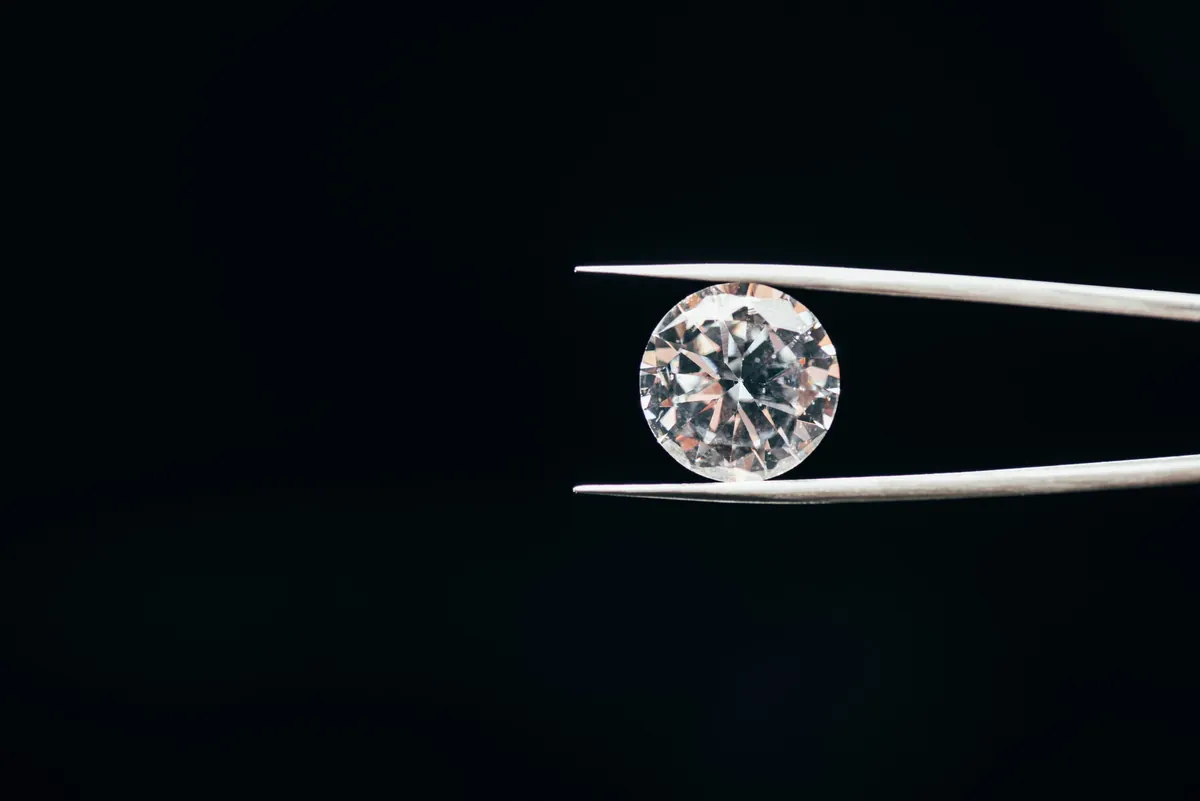
Most shapes belong to the brilliant family, faceted to scatter light into sparkle. The round brilliant, with its 57 or 58 facets, is the classic; its modern proportions go back to Marcel Tolkowsky, who set them out in 1919. Oval, cushion, princess, radiant, pear, marquise and heart shapes all use brilliant-style faceting, each lending that fire to a different silhouette. The film on this page shows a round brilliant turning slowly in the light, its facets flashing as it moves.
Step cuts work differently. The emerald, the Asscher and the baguette have long, parallel facets arranged like steps, which produce broad flashes of light rather than a scatter of sparkle. Looking into one is like looking down a hall of mirrors: calm, architectural and wonderfully clear. Because they show the interior so openly, step cuts reward a stone of fine clarity.
Shape also changes proportions on the hand. Elongated shapes such as the oval, pear, marquise and emerald tend to look larger than a round stone of the same weight and give the finger a longer, more slender line. To compare these outlines side by side, valcani's Diamond Shape Studio is a pleasant place to begin.
The Setting Holds the Story
The claw, or prong, setting is the classic choice: four or six slender claws hold the stone and lift it towards the light. Four claws show a little more of the diamond; six give a softer, rounder outline and added security. The six-claw solitaire was popularised by Tiffany in 1886 and still defines the idea of an engagement ring for many people.
A bezel setting encircles the stone with a smooth rim of metal. It is secure, modern and ideal for active hands, since there is nothing to catch on knitwear or gloves. Beyond these two, a wide repertoire awaits.
- Halo: a ring of small diamonds around the centre stone, adding brightness and presence
- Hidden halo: small diamonds set just beneath the centre stone, a secret seen from the side
- Pavé band: tiny diamonds set closely along the band, like a path of light
- Three-stone: a centre stone flanked by two smaller ones, often read as past, present and future
- Cathedral: graceful arches of metal rising from the band to cradle the setting
- Tension: the stone held by the pressure of the band itself, so that it seems to float
The stone draws the eye, but the setting decides how it lives.
Metal and Light
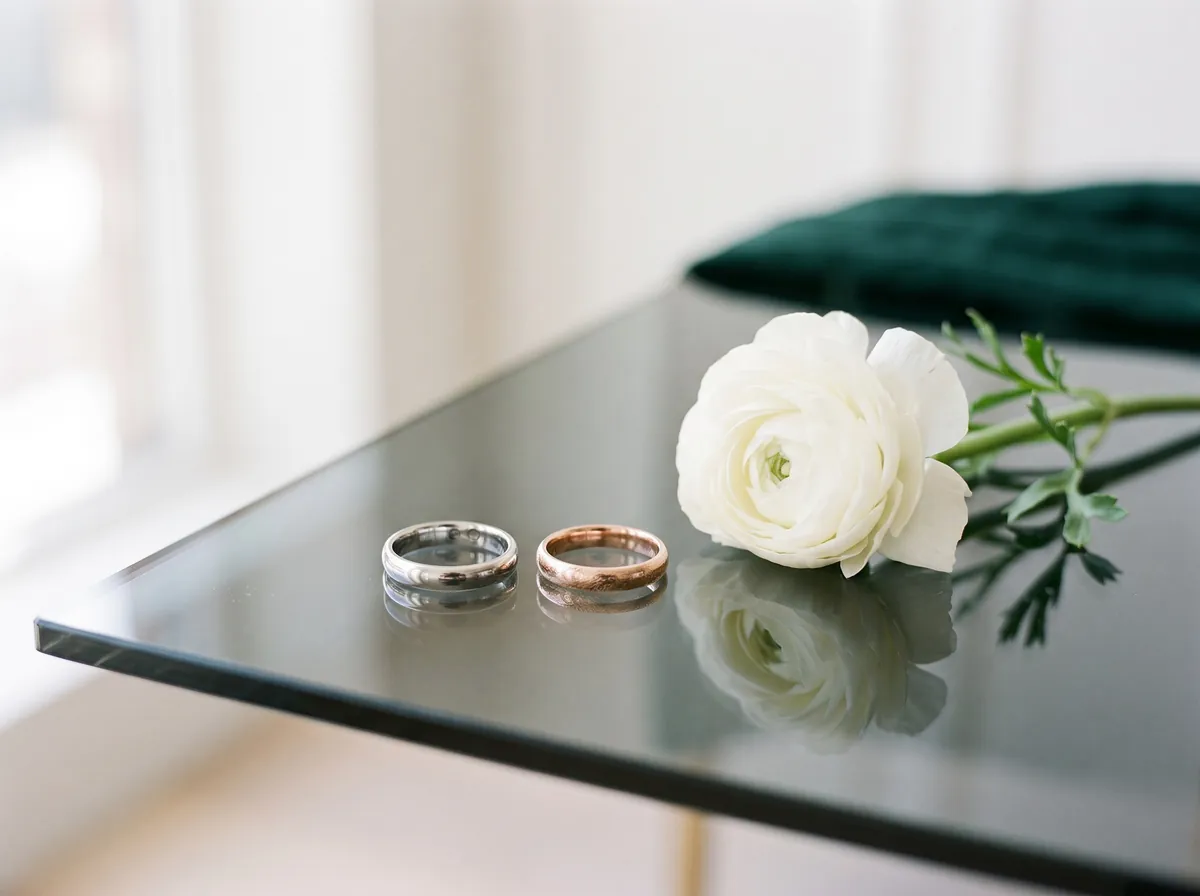
The metal around a stone changes how you see it. Platinum and white gold frame a colourless diamond in cool brightness and make it look crisp. Yellow gold brings warmth and a sense of heritage, and it lets a diamond with a faint tint appear perfectly at ease. Rose gold adds a soft blush that flatters many skin tones. Some rings combine the two, with white claws holding the stone above a warm band.
You may also be offered lab-grown diamonds. They are chemically the same as diamonds formed in the earth, with the same hardness and the same play of light, and they are priced differently. Choosing one or the other is a personal decision, and the same principles of cut, colour, clarity and carat apply to both.
Thinking Ahead to the Band
An engagement ring rarely stays alone for long, so it is wise to picture the wedding band beside it from the start. Some settings sit high enough for a straight band to rest flush against them, which gives the cleanest pairing. Others, such as a low bezel or a wide halo, may call for a shaped or contoured band that curves gently around the setting.
Both create beautiful results, simply different ones. A straight fit reads as two distinct rings worn in harmony, while a shaped band nestles in to form a single composition. Thinking about this early helps your jeweller choose the height of the setting and the width of the band with care.
Choose the shape that makes you pause, the setting that suits the way you live and the metal that feels like your own skin. When those three agree, the ring will look as natural on your hand in forty years as it does on the day it is given.
Questions, answered
Which diamond shape looks largest for its weight?
Elongated shapes such as the oval, pear, marquise and emerald tend to look larger than a round stone of the same carat weight, because their length spreads across the finger. They also lend the hand a longer, more slender line, which many people find flattering.
Which setting suits an active life?
A bezel setting, where a smooth rim of metal encircles the stone, is secure and modern and has nothing to catch on gloves or knitwear. A lower setting that sits close to the finger also helps. Talk your daily routine through with your jeweller before you decide.
Are lab-grown diamonds real diamonds?
Yes. Lab-grown diamonds are chemically the same as diamonds formed in the earth, with the same hardness and play of light. They are priced differently, and the choice between them is personal. The four Cs describe both in exactly the same way.
Three terms
- Brilliant cut
- A style of faceting designed to scatter light into sparkle, used for the round brilliant and many other shapes.
- Step cut
- A style of faceting with long, parallel facets arranged like steps, used for emerald, Asscher and baguette shapes.
- Bezel setting
- A setting in which a smooth rim of metal encircles the stone and holds it securely.
Photo: licensed stock photography.