
Finding the Right Watch Size for Your Wrist
Case diameter, lug to lug and thickness: how to choose proportions that look effortless.
A watch that fits well looks as if it had always been there. It sits flat, follows the curve of the wrist and slips beneath a cuff without a second thought. Getting there is less a question of fashion than of proportion. With a tape measure, a little knowledge of case dimensions and an eye for optical effects, you can find the size that feels effortless on you.
Begin With Your Wrist
Everything starts with one number: the circumference of your wrist. Wrap a soft tape measure around it just above the wrist bone, where a watch naturally rests, and read it snugly without pulling. If there is no tape to hand, a strip of paper works beautifully. Wrap it around, mark the point where it overlaps, then lay it flat against a ruler.
Look, too, at the shape of your wrist. Some wrists are round, others flatter and wider across the top, and a flat wrist offers more surface for a case to rest on. Two people with the same circumference may wear the same watch quite differently, which is why any measurement is a starting point rather than a verdict.
Most people wear a watch on the wrist they write with least, where it is safer from knocks and easier to set with the other hand. Measure that wrist in particular, since the two can differ slightly.
A Gentle Guide to Diameter
Case diameter is the width of the watch, usually measured across the case without the crown. The ranges below are an editorial orientation, not a rule. They describe proportions that often look balanced, and many people wear something outside them with great success.
- Slim wrist up to 15 cm: often 26 to 34 mm
- 15 to 16.5 cm: around 32 to 37 mm
- 16.5 to 18 cm: around 36 to 40 mm
- 18 to 19.5 cm: around 39 to 42 mm
- Larger wrists: 41 mm and above
Notice how the ranges overlap. That is deliberate, because case shape, dial colour and the length of the lugs all shift the impression a watch makes. For a personal starting point, valcani's Watch Size Guide works through the same proportions with your own wrist measurement.
The Span That Matters
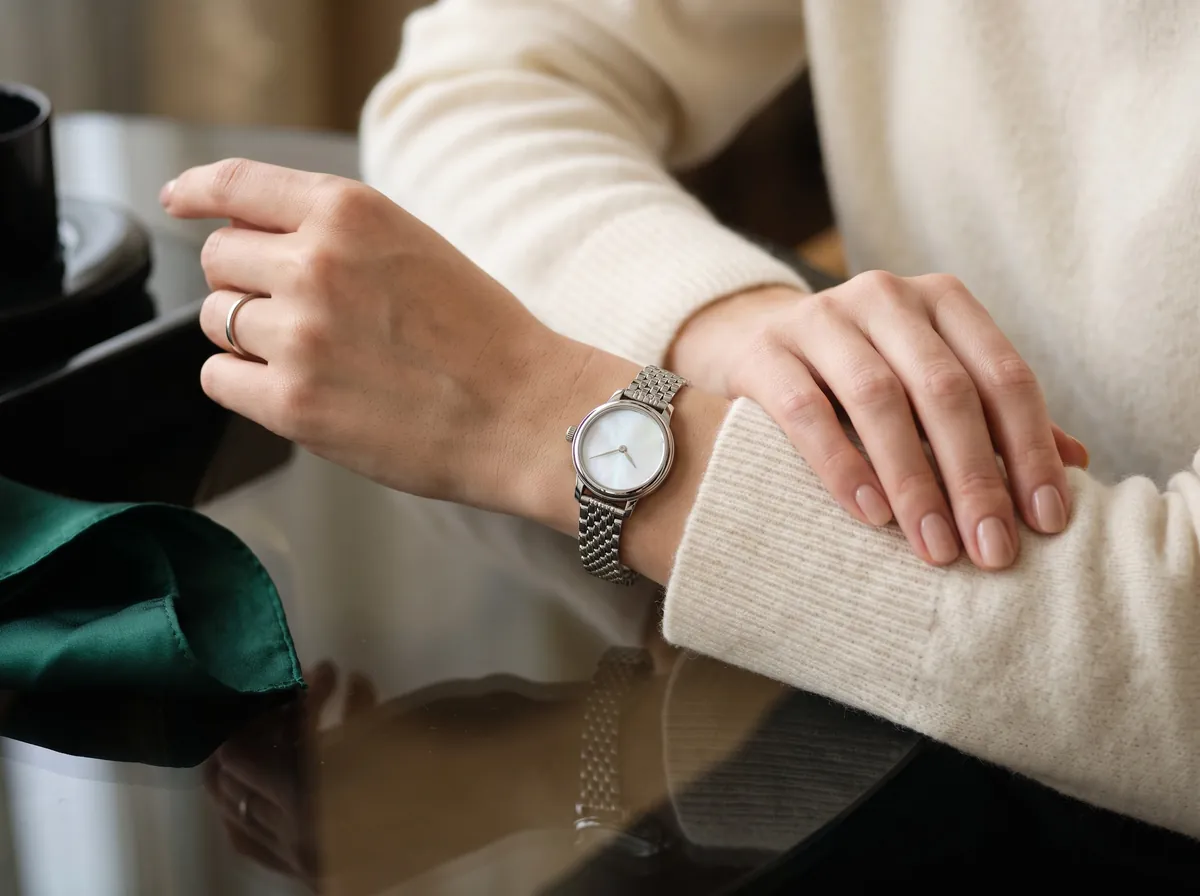
Diameter is the number everyone quotes, yet lug to lug often matters more. This is the distance from the tip of the upper lugs to the tip of the lower ones, the length the watch actually occupies along your wrist. The guiding principle is simple: the lugs should not overhang the edges of your wrist. When they do, the case floats above the skin and looks too large, whatever its diameter.
A watch with short, curved lugs can wear smaller than its diameter suggests, while long, straight lugs make a modest case feel bigger. Thickness plays its part as well. A slim case slides discreetly under a shirt cuff and suits tailoring and evening wear, while a taller case has presence and sits happily with a rolled sleeve or a chunky knit. If you often wear fitted cuffs, hold your wrist against one before you decide.
Tricks of the Eye
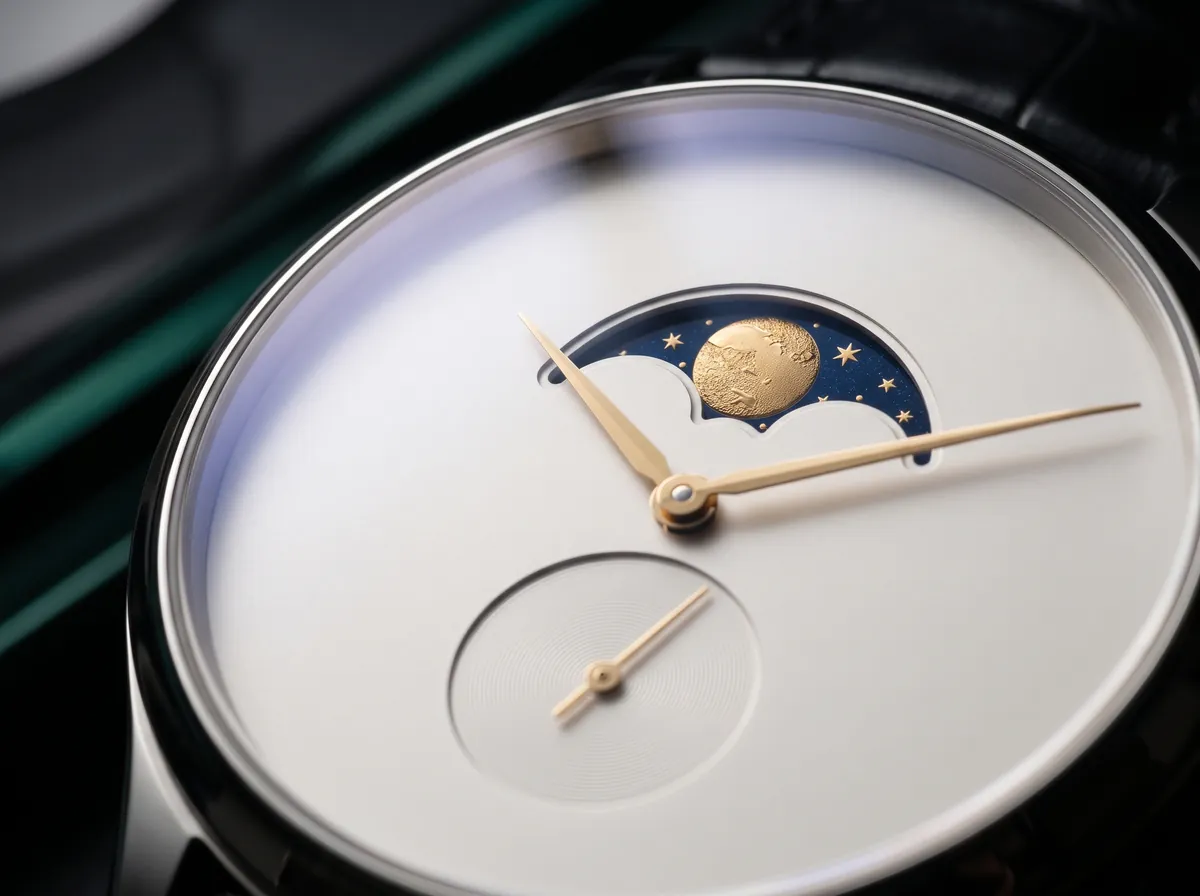
Two watches of identical size can look surprisingly different. A white or light dial framed by a thin bezel opens up the face and reads larger, because the eye takes in the whole surface as one bright field. A dark dial and a wide bezel do the opposite: they concentrate the face and read smaller and more compact.
Use this to your advantage. If you love a diameter that feels a little generous, a darker dial and a broader bezel will soften it. If you want a small case to hold its own, choose a pale dial and a narrow bezel. Polished cases catch the light and draw attention, while brushed surfaces recede quietly.
A watch that fits is never noticed for its size, only for its grace.
Bracelet, Strap and Style
The way a watch is fastened changes how it wears. A metal bracelet adds visual weight and continues the line of the case, so it can make a watch feel more substantial. It should be sized with care, link by link, so that it neither pinches nor spins. A leather or fabric strap is lighter in feel, softens the look and lets the case read slightly smaller, and changing it is an easy way to give one watch several moods.
Fashion has its own rhythm here. Smaller, vintage-sized cases are back in favour for women, worn alone like a fine bracelet or stacked beside one, and they carry a delicate, collected charm. At the same time, a larger watch worn deliberately is a confident style choice. When it is intentional, a generous case reads as personality.
Measure once, look carefully, and then trust your own eye. Proportion is a guide, but confidence is what makes a watch look right. The right size is the one you forget about as you go through your day, and notice with quiet pleasure every time you glance down.
Questions, answered
What if my wrist falls between two ranges?
Treat the ranges as overlapping guidance. Look at lug to lug, case shape and dial colour, which often decide more than diameter. Try both sizes if you can, and choose the one that sits flat and leaves a little wrist visible on either side of the case.
Is a small watch only for small wrists?
Not at all. Smaller, vintage-sized cases are back in fashion for women of every build, and they look refined and personal. On a larger wrist a small watch reads as a deliberate, elegant choice, much as a larger piece can on a slender one.
Should I measure my wrist tightly or loosely?
Measure snugly, with the tape resting flat against the skin but not pressing in. Then allow a little ease when you size a bracelet or choose a strap hole, so the watch can move slightly and stays comfortable as your wrist changes through the day.
Three terms
- Case diameter
- The width of the watch case, usually measured across the dial side without the crown.
- Lug to lug
- The distance from the tip of the upper lugs to the tip of the lower lugs, which shows how much of the wrist a watch covers.
- Bezel
- The ring that frames the dial and holds the crystal, whose width affects how large a watch appears.
Image: AI generated illustration.