
The Considered Wardrobe: A Capsule of Fine Basics
Twelve pieces of real quality that work harder than a full wardrobe of compromises.
A wardrobe full of clothes and nothing to wear is a familiar frustration. The answer is rarely more, and almost always better. A capsule of fine basics, chosen with care and made to last, gives you more combinations, calmer mornings and a style that feels unmistakably your own. Here are the twelve pieces at its heart, and the principles that keep them working for years.
A Short History of Less
The term capsule wardrobe is credited to Susie Faux, a London boutique owner who in the 1970s championed a small core of essential pieces to be refreshed with a few seasonal additions. In 1985 Donna Karan's Seven Easy Pieces collection made the idea famous with a compact set of interchangeable garments.
The thinking behind both remains persuasive. Fewer pieces, each of real quality, combine more freely than a crowded rail, and they ask fewer questions of you each morning. A capsule is not about austerity. It is about choosing so carefully that every garment earns its place, and then wearing each one often enough to know it by heart.
The Twelve
These twelve pieces form a foundation that adapts to the office, the weekend and most evenings. Each one is simple in line, which is exactly why it combines so easily with the others.
- A white cotton poplin shirt
- A cashmere crew-neck knit
- A fine merino turtleneck
- A tailored blazer
- Wide-leg wool trousers
- Dark straight jeans
- A silk blouse
- A little black dress
- A trench coat
- A camel wool coat
- Leather loafers
- Ankle boots
Notice the balance. There are four tops for different temperatures and moods, a blazer that sharpens all of them, two pairs of trousers that move between formal and relaxed, a dress for the evening, two coats for changing weather and two pairs of shoes that cover nearly every route. Wear the poplin shirt beneath the cashmere, the turtleneck under the blazer, the silk blouse with the jeans, and the combinations multiply quietly.
Quality in a capsule shows itself in small things. Look for poplin that feels crisp and smooth, cashmere that is dense and springs back when pressed, and merino fine enough to sit beneath a jacket without bulk. Silk should fall with a soft weight, a blazer should sit cleanly on the shoulders and wool trousers should drape straight from the hip. Leather for loafers and boots should feel supple, with an even grain that will soften and settle as you wear it.
A Palette That Agrees
Colour is what turns a capsule into a system. Build it on neutrals: navy, black, grey, camel, ivory and white. Neutrals are generous partners, since almost any one of them sits comfortably beside another, so each new piece multiplies your options instead of complicating them.
Then choose one accent colour, the shade that makes you feel most like yourself. It might be a deep burgundy, a soft sage or a clear cobalt blue, and it can live in a knit, a silk blouse or a scarf. One accent gives the whole wardrobe a signature. Add a second and a third, and the system slowly begins to fragment.
The Honest Arithmetic
Cost per wear is the most honest calculation in fashion. Divide what a piece cost by the number of times you wear it, and a well-made coat worn through many winters quickly becomes more reasonable than a bargain worn twice. The figure rewards quality, versatility and care, and it quietly changes the way you shop.
Fit comes before the label. A modestly priced blazer that fits your shoulders perfectly will look finer than a celebrated name that pulls across the back. Shoulders and length matter most, because they are the hardest to alter, while waists, hems and sleeves can usually be adjusted by a good tailor. Treat alterations as part of the purchase, never as an afterthought.
Kept for Years
A capsule changes with the seasons without losing its core. Rotate your pieces twice a year. In autumn, bring the camel coat, the cashmere and the ankle boots forward; in spring, let the trench, the poplin and the loafers take the lead. Store what is resting clean, folded and protected, and you will greet it again like an old friend.
Care is what turns good clothes into lasting ones. Fold knits rather than hanging them, so that they keep their shape. Wash cashmere by hand in cool water and dry it flat. Give wool a day of rest between wears, brush your coats after wearing them and keep cedar in the wardrobe to deter moths. Put shoe trees in your loafers and boots, and have the soles renewed before the leather wears through.
Choose fewer pieces, choose them well, and wear them often.
Once the twelve are in place, allow yourself one exceptional bag: beautiful leather, finely made, in a shade that agrees with your palette. It will travel with every outfit, lend each one character and grow more personal with every year. That is the real promise of a considered wardrobe: fewer decisions, and more pleasure in each one.
Questions, answered
Who invented the capsule wardrobe?
The term is credited to Susie Faux, who ran a boutique in London in the 1970s. The idea became famous in 1985, when Donna Karan presented her Seven Easy Pieces collection, a compact set of interchangeable garments designed to work together throughout the week.
How do I calculate cost per wear?
Divide the price of a piece by the number of times you wear it. A well-made coat worn every winter for many years often costs less per wear than an inexpensive piece worn only a few times, which is why lasting quality rewards you in the end.
Should the capsule change with the seasons?
The core stays, but the emphasis shifts. Rotate pieces twice a year, bringing coats, cashmere and boots forward in autumn and the trench, poplin and loafers in spring. Store resting pieces clean and folded, and replace only what has genuinely worn out.
Three terms
- Capsule wardrobe
- A small, carefully chosen collection of versatile pieces that combine freely with one another.
- Poplin
- A tightly woven, smooth cotton fabric with a fine crosswise rib, prized for crisp shirts.
- Cost per wear
- The price of a garment divided by the number of times it is actually worn.
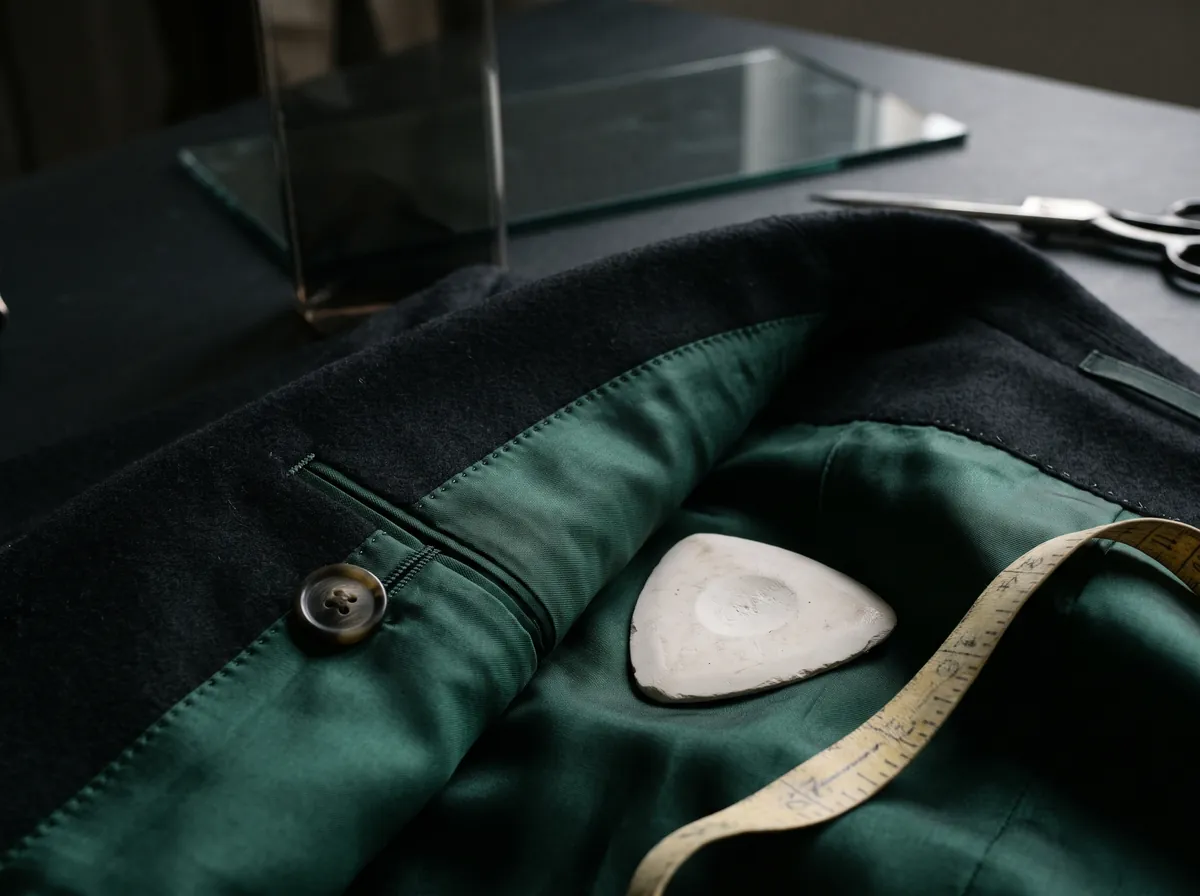
Image: AI generated illustration.