Caring for Fine Jewellery at Home
Cleaning, storing and checking your pieces: the small habits that keep gold, gemstones and pearls at their best.
Fine jewellery is made to be worn, and the pieces you wear most often deserve a little quiet attention to stay at their best. None of it is complicated. A few habits at the dressing table, a sensible place for each piece, a gentle wash now and then and an expert eye once a year are enough to keep gold bright, gemstones lively and pearls glowing.
Last On, First Off
The oldest rule in jewellery care is also the most useful. Jewellery goes on last, after perfume, body cream and hairspray have had a moment to settle, and it comes off first, before anything that might knock, scratch or soak it. Cosmetics leave a fine film that dulls the sparkle of a diamond and, over time, the surface of softer materials such as pearls.
Take your pieces off before sport, before swimming, before cleaning the house and before going to sleep. Weights and garden tools can bend claws, household products and chlorinated water are hard on metals and stones, and a restless night can snag a fine chain or bend an earring post. A small dish by the basin and another by the bed make the habit effortless.
A Place for Everything
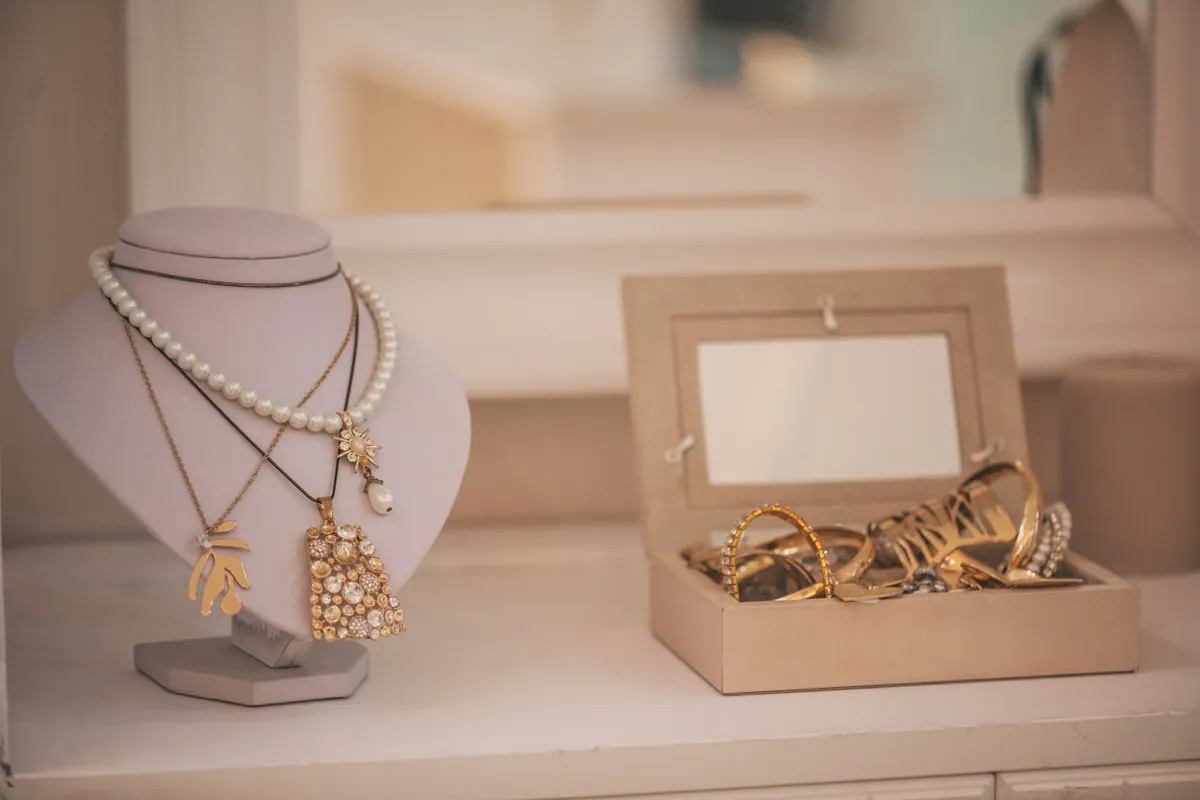
Store every piece separately. Diamond is the hardest natural material, and a diamond will scratch other gemstones, metals and even other diamonds if they are left to rub together in a drawer. Soft pouches, a box with lined compartments or a tray with individual sections give each piece its own space and keep it safe from its neighbours.
Chains are happiest hung from small hooks or laid flat with the clasp closed, so they cannot knot. Pearls prefer to lie flat in a soft pouch, away from harder pieces. Silver benefits from a closed box with an anti-tarnish strip, which absorbs the sulphur compounds in the air that slowly darken the metal. Keep everything away from heat and direct sunlight, and most of the work is already done.
The Gentle Bath
Gold, platinum, diamonds, sapphires and rubies can all be cleaned at home with nothing more than you already have in the bathroom:
- Fill a small bowl with lukewarm water and add a single drop of mild soap.
- Let the piece soak for a few minutes to loosen the film of everyday life.
- Brush gently with a very soft brush, especially behind the stone and around the claws.
- Rinse in clean lukewarm water, over a bowl rather than an open drain.
- Dry and polish with a soft, lint-free cloth.
Some materials should never take the bath. Pearls, opals, emeralds and turquoise are delicate, porous or often oiled, so simply wipe them with a soft, slightly damp cloth and let them dry. Keep chlorine away from all your jewellery. Ultrasonic cleaners, so effective on solid metal, are best kept away from any stone that is treated or included, emeralds above all, since the vibrations can disturb fillings and fissures. When you are unsure, choose the gentlest method.
Jewellery cared for a little every day rarely needs to be rescued.
Small Checks, Long Lives
Make a habit of looking closely at the pieces you wear most. Check that the claws holding each stone are even and secure; a claw that catches on a jumper is often the first sign that it has lifted. Hold a ring close to your ear and tap it gently, because a stone that rattles needs attention. Test the clasps on necklaces and bracelets, and the posts and backs of earrings.
Once a year, take your favourite pieces to a jeweller for a professional check. A jeweller can tighten claws, inspect solder joints, clean in ways that are not possible at home and notice wear long before it becomes a loss. White gold often carries a thin rhodium plating, which can be renewed when the warmer tone of the alloy begins to show through, and pearl strands can be restrung on fresh silk.
Jewellery on the Move
Travel is when jewellery is most easily scratched, tangled or mislaid. A jewellery roll in soft fabric, with pockets, a ring bar and loops for chains, keeps pieces apart and folds neatly into a handbag. A small hard case with lined compartments protects more delicate pieces, especially pearls and anything with raised claws.
Pack only what you will truly wear, keep your most precious pieces in your hand luggage rather than a checked suitcase, and fasten every chain before it goes into its pocket. On arrival, give each piece a home, a dish on the bedside table or a drawer used for nothing else, so nothing goes astray in the bustle of a hotel room.
Caring for fine jewellery is less a chore than a small ritual: a pause at the dressing table, a soft cloth, a moment spent looking closely at something you love. Those minutes add up to decades. The ring on your hand, the chain at your throat and the pearls in their pouch will still be bright and sound for whoever wears them next.
Questions, answered
How often should I clean my jewellery at home?
Clean pieces whenever their sparkle begins to fade, which for a ring worn every day may be quite often. Gold, platinum, diamonds, sapphires and rubies can have a gentle bath in lukewarm water with a drop of mild soap, while pearls, opals, emeralds and turquoise should only be wiped.
Why does white gold sometimes look slightly yellow?
White gold is an alloy that is often finished with a thin rhodium plating for a bright white surface. With daily wear the plating gradually thins and the warmer tone of the alloy shows through. A jeweller can renew the rhodium, and the piece looks bright white again.
Should I take my rings off to swim?
Yes. Chlorine in pools and hot tubs is hard on metals and some stones, and cool water makes fingers slimmer, so a ring can slip off unnoticed. The sea is no kinder to a loose ring. Take rings and bracelets off before swimming and keep them safe in a pouch or a small case.
Three terms
- Rhodium plating
- A thin layer of a bright white precious metal applied to white gold to give it a brilliant finish.
- Claw
- One of the small metal prongs that hold a gemstone securely in its setting.
- Anti-tarnish strip
- A small treated strip that absorbs sulphur compounds in the air and slows the darkening of silver.
Photo: licensed stock photography.