
The Art of Layering Necklaces
Lengths, weights and textures: a calm method for stacks that look effortless and never tangle.
A well-layered neckline looks as if it happened by chance: a few chains falling at different depths, catching the light as you move. In truth it rests on a calm little method of lengths, weights and textures. Once you know it, you can build a stack in a minute, adapt it to any neckline and, best of all, take it off at night without a single knot.
The Rule of Five
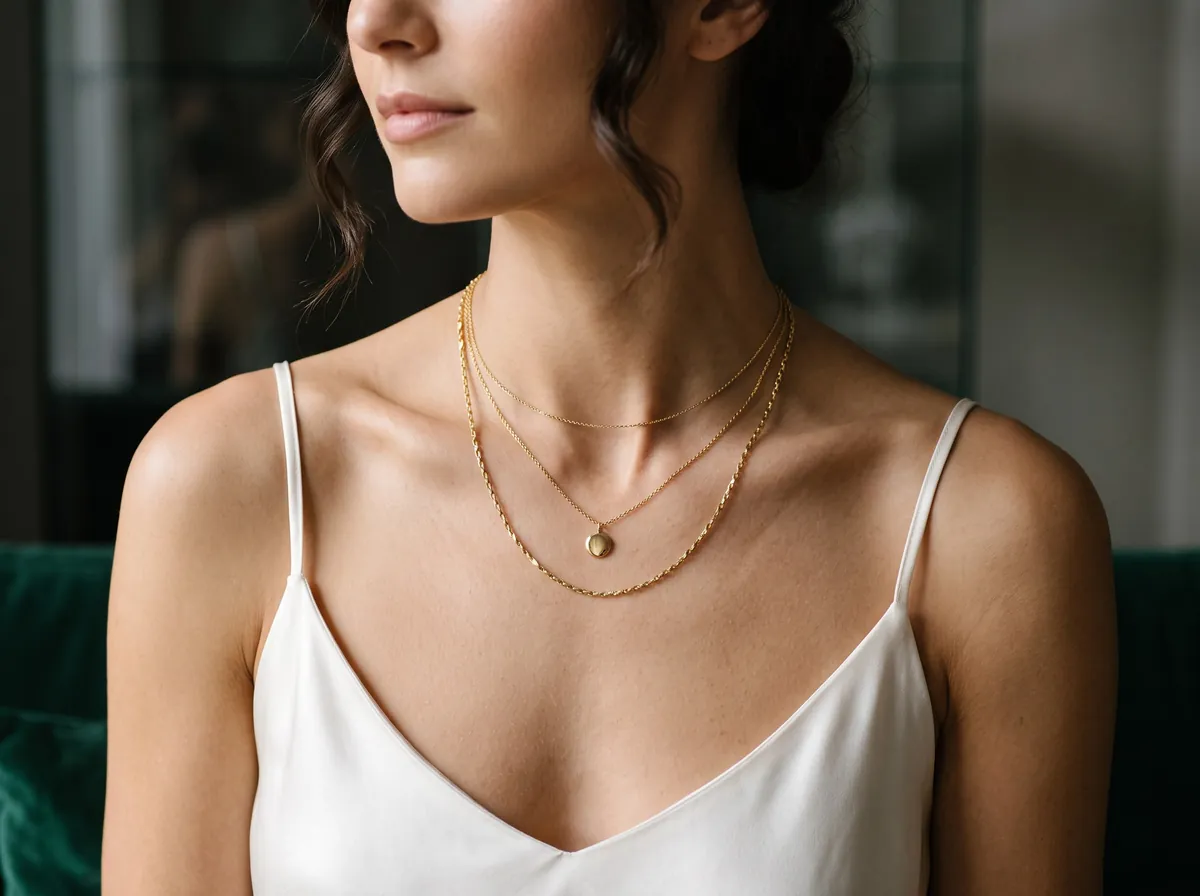
The most useful number in layering is five. Leave about five centimetres between each chain and every layer has room to show itself, without crowding its neighbour or sliding into it. A stack of 40, 45 and 50 cm, for example, gives three clear lines that fall like steps from the base of the throat towards the breastbone.
Build from the top down. Begin with the shortest piece, the one that sits closest to your neck, and let it set the tone. Add the next length beneath it, then the next, checking in the mirror as you go. The eye reads a stack from the top, so a confident first line makes everything below it look intentional.
Three is the classic number: enough for rhythm, not so many that the pieces compete. If you are new to layering, start with two. A fine chain and a slightly longer one with a small pendant already look considered, and you will soon sense whether a third would add to the picture or distract from it.
Weight and Texture
Chains of identical weight tend to merge into a single shimmer. Vary them instead. One graceful sequence runs from a fine chain at the top to a medium chain carrying a pendant in the middle and a heavier, textured chain below. The different weights give the stack depth, and they also help the layers hang apart.
Texture is where a stack finds its personality, because each chain style catches the light in its own way:
- Paperclip: long, open rectangular links that feel airy and modern.
- Box: small square links that form a crisp, geometric line.
- Rope: twisted links that spiral and glint with every movement.
- Snake: closely fitted plates that flow like liquid metal.
- Curb: flat, interlocking links that lie smoothly against the skin.
Mix two or three of these, but keep one focal piece: a pendant, a single pearl or a medallion that the other chains frame. Without a focal point the eye wanders; with one, every chain around it suddenly has a purpose.
One Metal or Two
A stack in a single metal is serene and easy, and it lets texture do the talking. Yellow gold reads warm and luminous, white metals feel cool and graphic, rose gold sits softly on most skin tones. If you are building a first stack, one metal is the quiet way in.
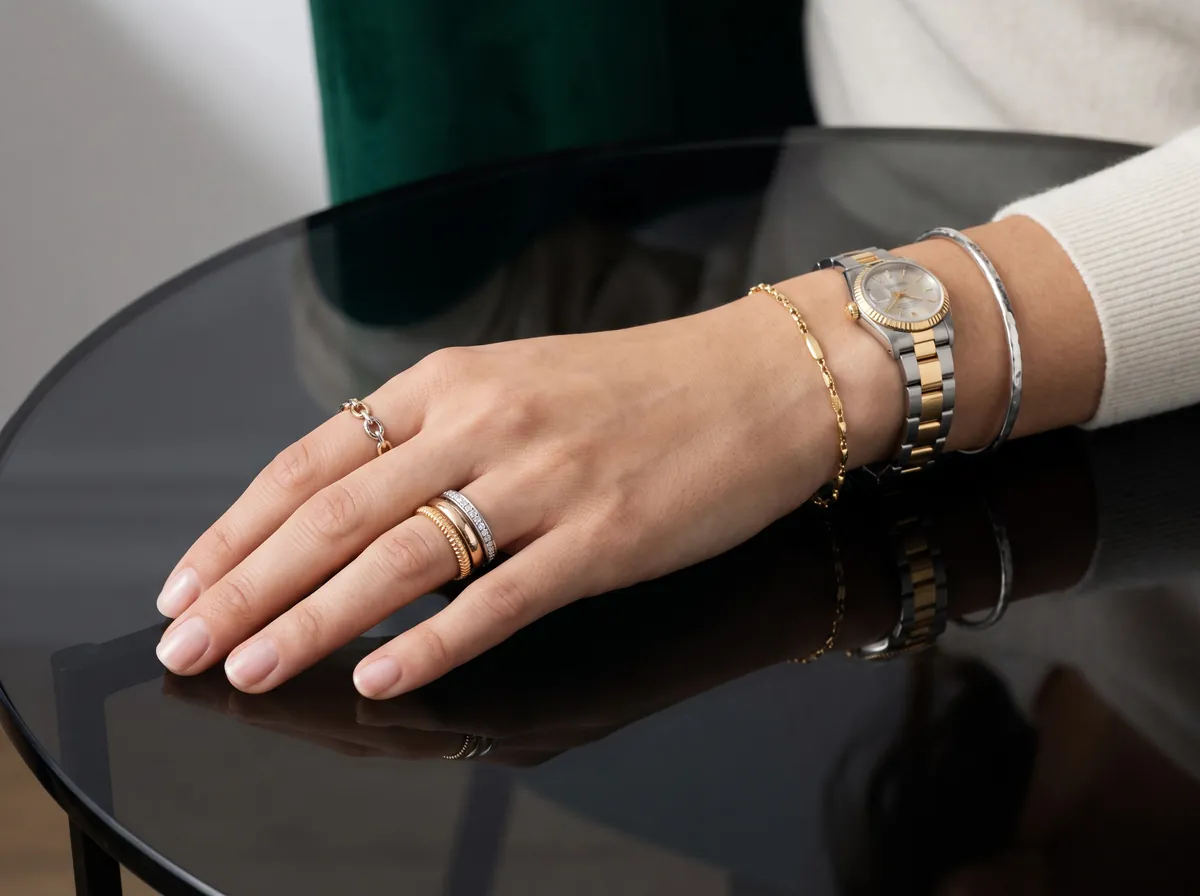
Mixing metals works beautifully when it looks deliberate. Repeat each metal at least twice across what you wear, or anchor the mix with a two-tone piece that carries both, so the eye sees a plan rather than an accident. Rings, a watch or earrings worn alongside can echo the necklaces and tie the whole look together.
Reading the Neckline
Open necklines love layers. A V-neck, a scoop, an open-collared shirt or a strapless dress leaves bare skin for the chains to fall across, and the shape of the neckline can guide the stack: let the layers follow the point of a V, or sit neatly within the curve of a scoop.
High necks ask for something different. Over a turtleneck or a high crew neck, several short chains disappear into the fabric, so choose one long layer instead, a pendant or a longer chain that falls over the knit. With a shirt buttoned to the top, a single fine chain beneath the collar is enough, and the full stack can wait for the evening.
Layering is not about wearing more. It is about letting each piece breathe.
Without a Tangle
Tangles are the one small frustration of layering, and most of them can be prevented. Different weights help, because a heavier chain hangs straighter and resists twisting around a finer one. A layering clasp or separator, a small bar or connector that holds several chains apart at the back, keeps each layer in its own lane all day.
Turn every clasp to the back of your neck once the necklaces are on, since a clasp that drifts forward pulls its chain out of line. Put the pieces on from shortest to longest, and take them off in reverse, longest first. It sounds trivial, yet it means no chain ever has to pass over another.
At night, store each chain separately: hung from a small hook, laid flat in its own lined compartment or tucked into a soft pouch with the clasp fastened. Fine chains left loose together in a dish will find each other by morning. Clean plain metal chains now and then with lukewarm water and a drop of mild soap, and dry them thoroughly before putting them away.
Begin with two chains you already own, five centimetres apart, and wear them for a week. Add a third when you feel the rhythm. A good stack is never quite finished: it grows with you, a chain from a birthday here, a pendant from a journey there, until your neckline tells a story entirely your own.
Questions, answered
What lengths work best for a three-layer stack?
Space the chains about five centimetres apart, building down from the shortest. A stack of 40, 45 and 50 cm is a classic starting point, but your neck, your neckline and any pendant all play a part, so try the pieces on together in front of a mirror before you decide.
Can I layer necklaces in different metals?
Yes, as long as the mix looks intentional. Repeat each metal at least twice across what you wear, or add a two-tone piece that bridges them. If you prefer a calmer look, a single metal lets the textures and lengths do all the work.
How do I stop layered necklaces from tangling?
Choose chains of different weights, so the heavier ones hang straight, and consider a layering clasp or separator that holds them apart. Turn all clasps to the back, put the necklaces on from shortest to longest and take them off in reverse order.
Three terms
- Paperclip chain
- A chain of long, open rectangular links that resemble a row of linked paperclips.
- Layering clasp
- A clasp or separator that holds several necklaces apart at the back of the neck.
- Focal piece
- The one pendant, pearl or medallion in a stack that draws the eye and anchors the composition.
Image: AI generated illustration.